
Why the “right” harness won’t fix the pulling
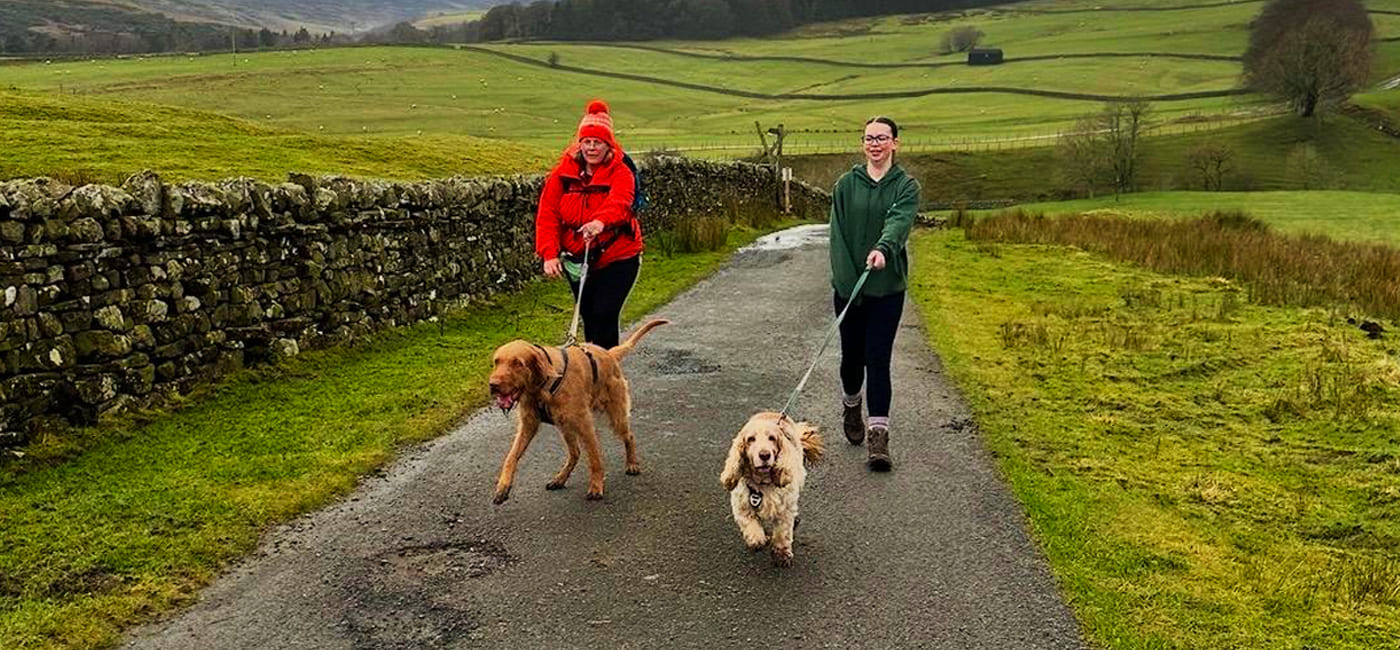
Every week, we see the same question being asked.
"What's the best harness to stop my dog pulling?"
It's a fair question. Your shoulder aches. The walk you looked forward to has become a tug of war. You've read the reviews, watched the videos, added three things to your basket and taken two back out. You just want the walk to feel nice again.
We think there's a different way to look at the whole problem. So here's our take on it.
Equipment doesn't stop pulling. It manages it.
A head halti, a front-clip harness, a no-pull this-or-that. These tools change how the pulling feels to you. Some of them change how it feels to your dog, too, and not always in a good way. Head halters work by turning your dog's head. That can take the strain off your arm, but it puts strain somewhere else, on your dog's neck, and that trade-off matters a great deal.
But even the kindest, best-fitted harness in the world doesn't teach your dog anything. It just makes the pulling more comfortable to hold on to. Your dog is still pulling; you're just better equipped to survive it.
And that's not a criticism, because sometimes surviving the walk is exactly what you need this week. Good equipment has its place, and a well-fitted Y-shaped harness that sits clear of the shoulders is a sensible baseline for most dogs. But if the goal is a dog who doesn't pull, your answer lies in a different place.
Why is she pulling in the first place?
This is the question worth asking. Dogs pull because the world is out there and they want to get to it. The lamppost with the wee on it, the other dog, the interesting smell forty feet ahead. Pulling works because it moves them closer to the good stuff. Every time it works, it gets a little more ingrained.
Add in a dog who's under-stimulated, over-aroused, or simply walked into an environment that's far too much for her, and pulling isn't naughtiness. It's a dog automatically doing something that makes sense to her in that moment that gets her what she wants.
And sometimes the dog is pulling because something hurts. A sore body braces and lunges in ways a comfortable one doesn't, and pulling can be a sign that something needs looking at rather than training away. Pain can be something that’s hard to spot, because it doesn't always look like limping. It might be a dog who lags behind and then lunges, who pulls far worse on some days than others, or who used to walk beautifully and has suddenly stopped. If any of that sounds familiar, a chat with your vet, or a Dynamic Dog practitioner, comes before any training plan.
Which means the fix isn't a stronger tool. It's changing what she's being asked to cope with.
Three things that shift it
Choose the environment more carefully. Not every walk has to be the busy park or the pavement past six other dogs. A quiet field, a wide verge, a spot with room to breathe. You're setting her up to succeed instead of asking her to hold it together somewhere overwhelming. Fewer things to pull towards means fewer chances to practise pulling.
Use her brain, not just her legs. A lot of pulling is a dog with energy and nowhere to put it. You can drain that tank without walking a single extra mile. Scatter her breakfast in the grass. Hide a few treats around the garden and let her find them. And it doesn't have to be about food. Let her see you've got a toy she loves, hold her while you throw it out, then release her to get it after it's hit the ground. Do this where the grass sits a little higher than the toy and she'll have to engage her nose to find it. Scentwork isn't a formal class thing you have to sign up for, it's this simple, and she'll love you for it. Give her a proper sniff-about on a long line instead of a march around the block, because there's a difference between a dog who's physically run into the ground and one who's worked her nose. The first comes home wired and wanting more. The second comes home ready to sleep.
Teach the walk you want. This is the slow part, and the part worth doing. Rewarding her for checking in, for a loose lead, for choosing to stay with you rather than drag you. That's what changes the pulling for good. This is also the part with the most going on under the surface. Picking your spot, knowing what'll set her off before it does, reading whether she can cope right now, and whether you're in the right headspace to help her. It's more than a blog can hold, so we'll come back to it another time. For now, know that the loose lead is a skill you both learn, not a thing you buy.
Start where you are
If your dog can't do much right now, whether she's recovering from something, still a pup, or just not ready for the big wide world, you are not stuck. Sniffing and searching are low-impact and endlessly tiring in the best way. You can build a calmer, more connected dog from your living room floor. And it isn't only about tiring her out for the afternoon. A dog who gets to use her nose regularly tends to be less wound up in general, steadier in herself, quicker to settle, easier to live with. The calm builds over time.
The harness question is really a different one underneath. It's not "which tool stops the pulling." It's "how do I help my dog want to walk with me?"
That question has a much better answer, and no harness is going to give it to you.